Compare interpreting modes
The format changes
the conversation
| Mode | How it works | Typical setting | Programme implication |
|---|---|---|---|
| Simultaneous | The interpreter renders speech while the speaker continues, with a short processing lag. | Symposia, seminars and conferences | The presentation continues without a separate interpreting turn after each passage. |
| Consecutive | The speaker pauses after a manageable passage and the interpreter renders it in the other language. | Business meetings | The agenda must allow time for both the original speech and its interpreted version. |
The choice depends on the event structure, language directions and interaction between participants. A meeting with discussion has different needs from a sequence of conference presentations.
Conference interpreting
Plan for the discussion
as well as the speech
A conference programme contains more than presentations. Introductions, panel exchanges and audience questions also need a clear language plan.
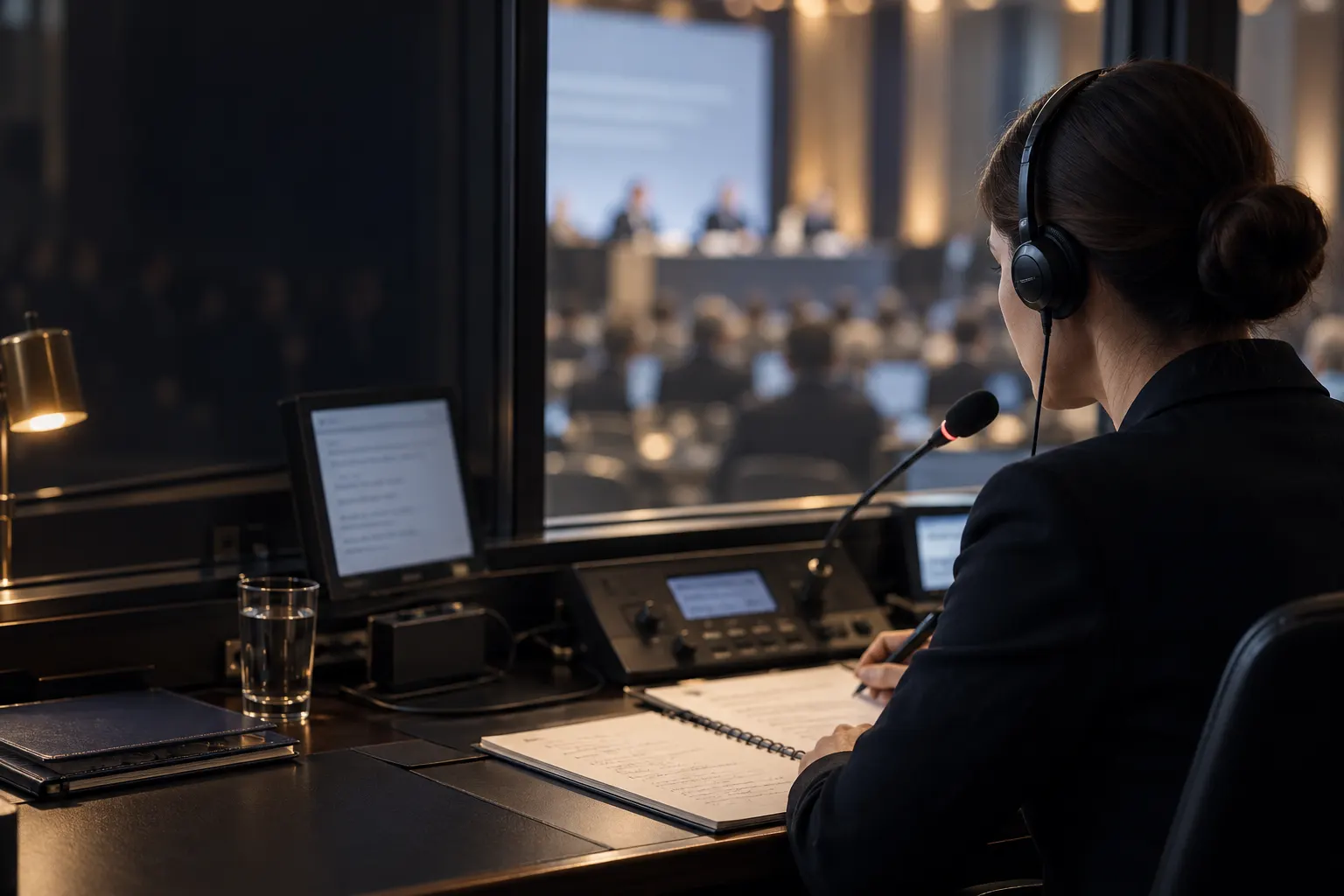
Simultaneous interpreting supports a continuous presentation format at symposia, seminars and conferences. The interpreter listens, understands and reformulates speech almost at the same time. Advance knowledge of the subject helps with that demanding task, especially where a speaker moves quickly between specialist terms, names, figures and references to slides.
An agenda should identify the language of each session and any points where the direction changes. A speaker presenting in English may take a question in German; a panel may include several speaking languages. Those transitions matter as much as the main presentation when defining the interpreting requirement.
The organiser should also identify sessions that run at the same time, changes of room and the expected participation format. These details establish the scope before arrangements are confirmed. An event title and approximate attendance alone do not explain how communication will actually work.
Business meetings
Leave room
for an accurate exchange
Consecutive interpreting gives each contribution a separate turn. At a business meeting, a speaker delivers a passage, pauses and allows the interpreter to render it. The rhythm supports direct exchanges, but a tightly packed agenda must account for the additional speaking time. Long uninterrupted statements make the task harder and can overwhelm the discussion.
A useful briefing identifies the meeting’s purpose: explaining a process, negotiating terms, discussing specifications or reviewing a proposal. The interpreter needs the subject and terminology, not authority to decide the commercial position. Participants remain responsible for their statements, commitments and decisions.
Written material can support a meeting but serves a different purpose. A contract, technical specification or presentation required in another language should be scoped as written work through legal translation or technical translation, as appropriate.
Organiser preparation
Brief the interpreter
before the event begins
Programme and language directions
Supply the date, location, session timings, breaks and expected duration. State the languages speakers will use and the languages participants need to hear. Mark parallel sessions, panel discussions and audience questions so that the requirement reflects the complete programme rather than only the opening speech.
Subject and reference material
Provide the agenda, presentations, abstracts and relevant background documents as early as practicable. Include specialist terminology, abbreviations, product names and names of speakers or organisations. Draft material is useful when clearly identified; changes should be communicated so that preparation follows the latest available content.
People and meeting protocol
Identify the organiser’s contact and explain how speakers will take turns. For consecutive meetings, participants should pause regularly and avoid speaking over each other. Where figures or names carry particular weight, supporting written references reduce ambiguity. A clear protocol helps the interpreter follow the exchange accurately.
Specialist language needs advance context
An abbreviation that is familiar inside one company may mean something different in another field. A reference to ‘the second line’ could concern production, treatment or a budget. Presentations and background notes allow terminology to be understood as part of the subject rather than guessed from an isolated phrase.
Babylon Translations has 25+ years in professional language services, with in-house project managers and a network of subject specialists. The agency profile explains that organisation. For interpreting, the event brief should specify the subject and required language directions so that the actual assignment can be assessed.
Confirm the assignment against the final programme
A revised agenda can materially change the requirement: an added discussion, a different speaking language or overlapping sessions may need fresh assessment. The organiser should distinguish confirmed sessions from provisional ones and communicate changes before the event. Interpreting arrangements should follow the programme that will actually take place.
An interpreting enquiry can be made by email or phone. The initial request should bring together the date, place, languages, subject, preferred mode and programme. These details support a specific discussion of availability and scope without relying on assumptions about the event.
Interpreting questions
Before confirming
the programme
What is the difference between simultaneous and consecutive interpreting?
Simultaneous interpreting takes place while the speaker continues; consecutive interpreting takes place during pauses after passages of speech. Babylon Translations offers simultaneous interpreting at symposia, seminars and conferences, and consecutive interpreting at business meetings. The appropriate mode depends on the programme, language directions and the way participants need to interact.
Which interpreting mode suits a business meeting?
Consecutive interpreting suits business meetings organised around an exchange of contributions. Participants speak in manageable passages and pause for interpretation before continuing. The agenda needs to allow for both language turns. The meeting brief should explain the subject, participants and intended discussion so that the format can be assessed against the actual requirement.
What should conference organisers send before an interpreting assignment?
Conference organisers should send the programme, language directions, subject information and available speaker materials. Presentations, abstracts, terminology lists and names help establish context. The brief should also identify audience questions, panel sessions and parallel tracks, because interpreting requirements depend on the whole event structure rather than the prepared speeches alone.
Can interpreting cover questions after a presentation?
Audience questions should be included in the interpreting brief when they form part of the programme. Organisers need to state the languages in which questions may be asked and the languages needed for the answers. That information makes language changes visible during planning rather than leaving them to be resolved during the discussion.
How much time should a consecutive meeting allow?
A consecutive meeting needs time for the original contribution and its interpretation. The amount depends on speaking pace, passage length, subject complexity and discussion format, so a fixed allowance cannot be assumed for every meeting. A realistic agenda includes regular pauses, avoids overlapping speech and leaves space for clarification where required.
How can an interpreting assignment be requested?
An interpreting assignment can be requested from Babylon Translations by email or phone. The request should specify the event date, location, duration, subject, language directions and preferred mode. A programme and available reference material help define the assignment. Availability and the final scope depend on the particular event and require confirmation.